


I’m trying to understand what makes us who we are beneath everything we show the world, the emotions, contradictions, and parts of ourselves we don’t always know how to name. Through my art, I’m searching for a connection between what I feel inside and what I can see or touch, and for a way to feel whole while holding both the light and darkness in me.
Right now, I’m working on my next show, bringing together performance, sound, interactive design, and painting. Through it, I’m exploring how the brain works, especially through synesthesia, how a sound can become a color, a shape, or even a smell. I can’t stop thinking about how differently we each experience the same world, and how making art helps me understand the connections my brain makes before I can put them into words.
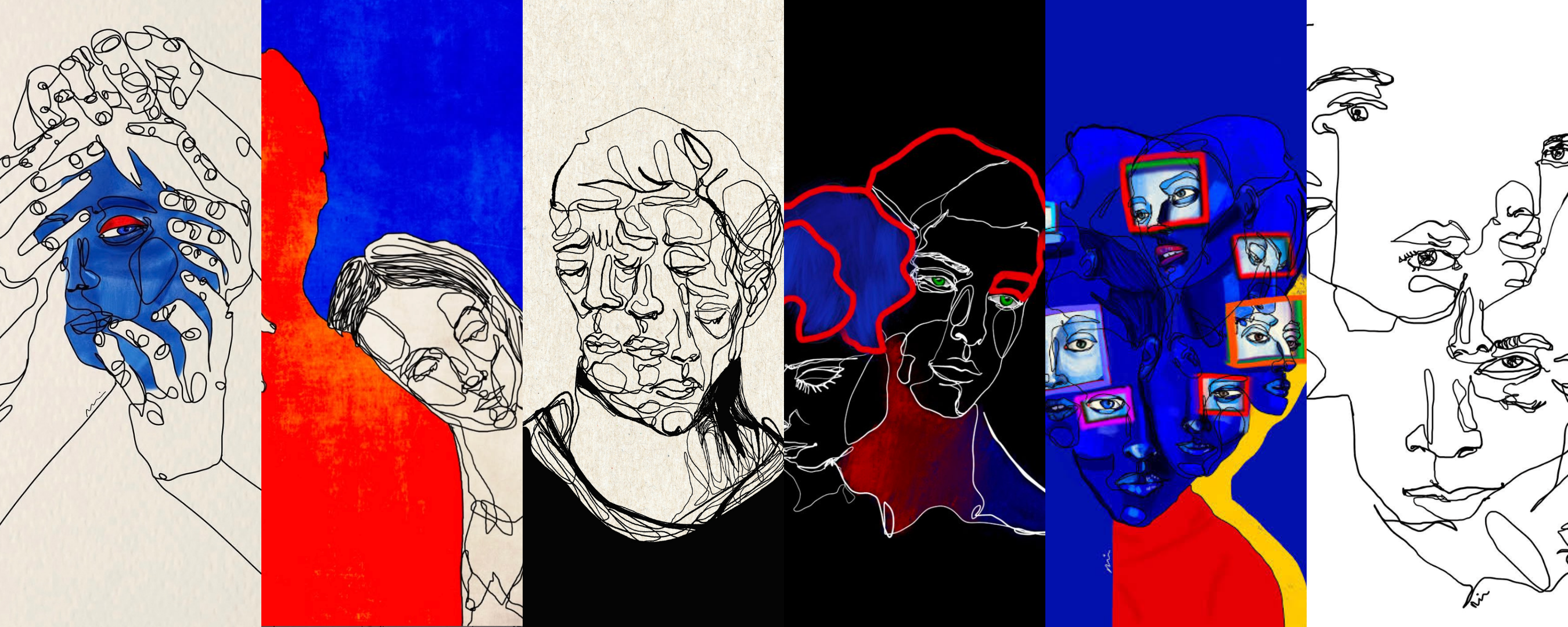
In those few seconds, I feel so much that I need somewhere for it to go. It usually happens when I connect deeply with music or with something I’m feeling. The emotions become too intense to hold inside, and drawing feels like the only way to release them. That first line is almost a breath.
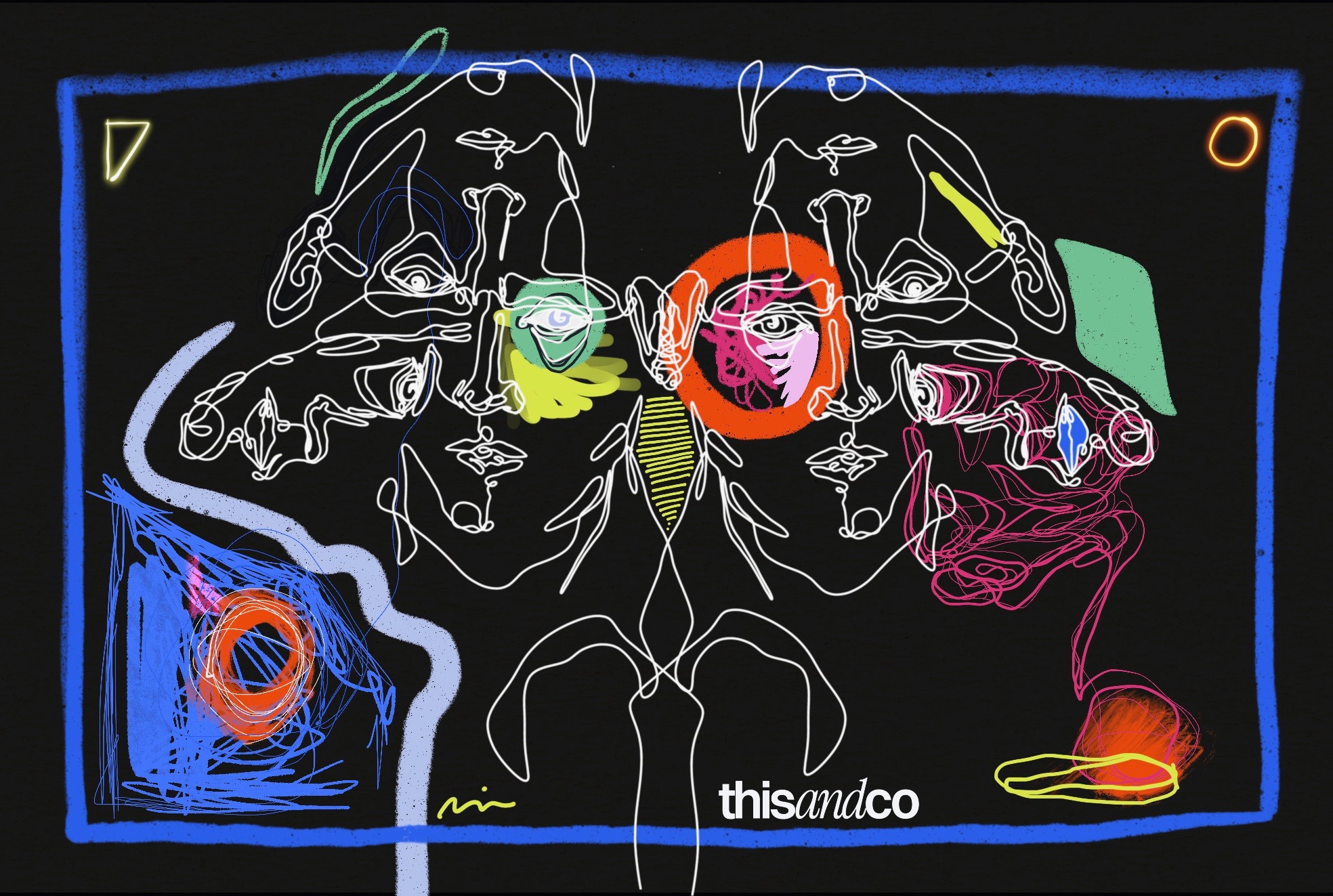
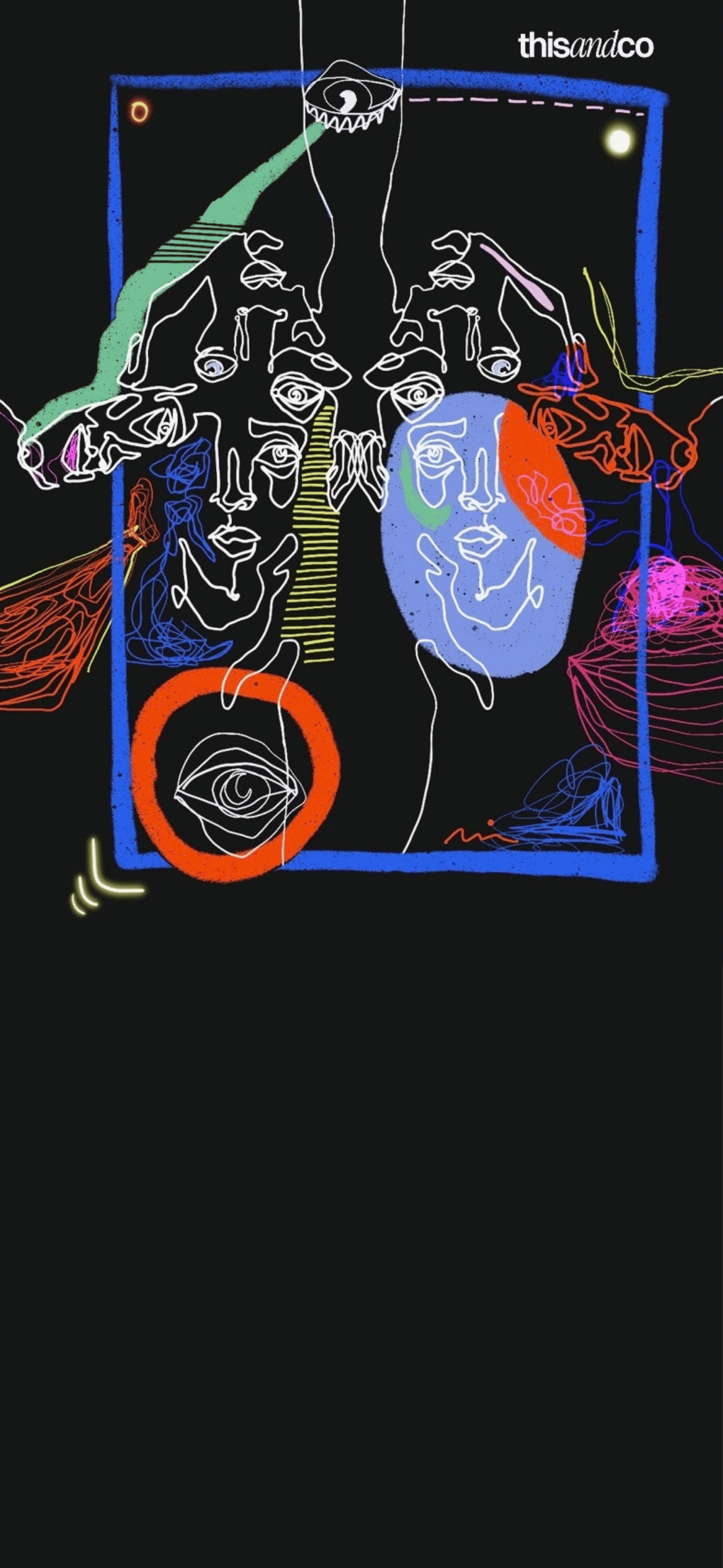
Working with both hands lets me follow more than one feeling at a time. Sometimes they move together, and sometimes they pull in different directions, which feels close to how I experience my inner world. At times, I feel as though one hand is connected to my rational side and the other to my emotions. Drawing this way helps me loosen control and respond more directly to the music and what I’m feeling. It’s like learning a new language that changes how I see the world and lets more of myself come through at once.
Everything! I’m deeply in tune with my body. Before I can explain what I’m feeling, it has already reacted. My mind can overthink, question, or talk me out of something, but my body’s response feels honest and immediate. I trust it, it often tells me what I haven’t yet found the words to say.
I think intuition can be practiced by paying attention. I believe we all have it, but sometimes it becomes harder to hear beneath everything we absorb from the world. When I watch children create, I’m struck by how freely they follow their impulses. For me, practicing intuition means finding my way back to that openness.
It starts with noticing how my body responds before my mind begins to explain it away. The more I draw, the more I learn to recognize that feeling and give it space. Trust doesn’t mean I always understand it or get everything right. It means I’m willing to listen, even before I have an explanation.”
I notice how much people communicate without words, the shift in a voice, a small movement, or the silence after someone says they’re fine. I’m drawn to those moments when what someone feels slips through what they’re trying to show. They make me wonder how much of each other’s inner worlds we walk past every day.
Inspiration usually finds me through music, emotions, and small moments of connection. With my synesthesia, sound becomes color, shape, and movement, and sometimes I feel an urge to draw before I understand why. I don’t usually search for inspiration. I try to stay open and pay attention, to what’s happening around me and what’s moving inside me.
Living in these different places has made me more aware of how many ways there are to see the world. Each move has challenged things I took for granted and made me look more closely at myself, too. Moving between languages and cultures has also drawn me toward expression that doesn’t depend on words. A line, a gesture, or a piece of music can connect people who don’t share the same background. I think that’s part of why my work keeps returning to what we carry inside us, emotion, contradiction, longing, and the need to connect.
Iran is still very present in my work, though often indirectly. I don’t necessarily use Iranian symbols or typography, but it’s part of how I feel and understand the world. Growing up in such a rich, ancient culture shaped how deeply I connect with art. It was woven into everyday life, in our surroundings, in poetry, in the language we spoke, and in the artists around me.
Leaving a place doesn’t mean it leaves you. I’m shaped by everywhere I’ve lived, but Iran is where my story began. Sometimes its presence in a drawing is something I feel before I can name it.
I had to unlearn the need to resolve everything. In design, I was used to working toward a clear goal, thinking about the audience, and being able to explain my decisions. In my art, I’ve had to make room for uncertainty and trust what I feel before I can explain it.
I also had to let go of making every line look “right.” The hesitation, the shaky line, the unexpected movement, those became part of the work. Design taught me how to communicate with intention; art has taught me to listen to what emerges when I loosen control.
Rather than one particular work, there are artists whose whole way of seeing has changed mine. Leonardo da Vinci has inspired me since childhood. His curiosity moved between art and science, which feels close to my own interests, and learning that he was reportedly ambidextrous gave me another sense of connection to him.
Van Gogh moves me differently. There’s something dreamlike in the way I experience his paintings, as though the world is being felt as much as seen. I’m drawn to their emotional depth and the way color and movement can make an inner experience visible.
Hundertwasser is another huge inspiration, his paintings, his way of thinking, and his architecture. I love the freedom in his lines and how deeply his work feels connected to nature. His willingness to question rules inspires me to trust my own way of seeing and return to nature as a source of creativity.
I also love Bauhaus, especially its artists and architects. What draws me in is the thought behind the simplicity: how shapes, colors, materials, and spaces can change the way we live and feel. It has made me more attentive to the art in everyday life. And music belongs in this answer too. Certain musicians have changed how I see as much as any visual artist, because sound is often where a drawing begins for me.
That you have to know what you’re making before you begin, or that a drawing has to be perfect or realistic to be meaningful. I started drawing with both hands as a way to challenge my perfectionist brain. It helped me loosen control and allow the unexpected to happen.
I often start with a feeling, a piece of music, or an urge to move my hands. The meaning can emerge while I’m drawing, or even afterward. I’m happy to let the line take me somewhere I didn’t plan to go.
I see myself as an artist rather than a practitioner of one particular medium. Drawing, performance, technology, and installation are all tools I use to express what I’m feeling or exploring. I’m curious about how the same idea can take different forms. Drawing lets me follow something intimate, performance brings my body and music into that process, and technology opens up possibilities I couldn’t reach with my hands alone. What connects them is my desire to understand what happens inside us and make it visible. As that curiosity grows, the way I express it changes too.
Making art has shown me how much I carry before I have words for it. Sometimes my hands reveal an emotion or a contradiction I haven’t consciously recognized yet. Looking at what I’ve drawn, I begin to understand what I was feeling. But among everything drawing has taught me, patience comes first. I always thought of myself as someone who lacked patience, but my drawing journey has shown me otherwise. I’ve learned to stay with something, let it unfold, and give it time without needing an immediate answer.
It’s also taught me that I can hold opposite feelings at once: strength and vulnerability, darkness and light, connection and loneliness. Through drawing, I’ve learned to let those parts of myself exist together without having to resolve them immediately.
I’m curious about how code and interactive art can turn an audience’s presence into part of the work. What happens when someone’s movement, touch, or voice changes what they see and hear? I haven’t yet found the right way to express that, but I want to create an experience that responds to people as they respond to it, where their curiosity and choices help shape the art.
I want to go deeper into the relationship between the brain, the body, and creativity, especially through my experience of synesthesia. I’m interested in how sound becomes a physical response and how my hands express things before I consciously understand them. I’d love to bring those questions into more immersive performances and installations, where people can experience the connection between music, movement, and drawing. What feels new is finding a way to share more of what happens inside me while I’m creating.
I think I would still draw. So much of my work begins with a feeling I need to release, before I even think about anyone seeing it. I would put on music and let my hands move, without worrying about whether the result made sense to someone else. The act of making would be enough.
.png)