
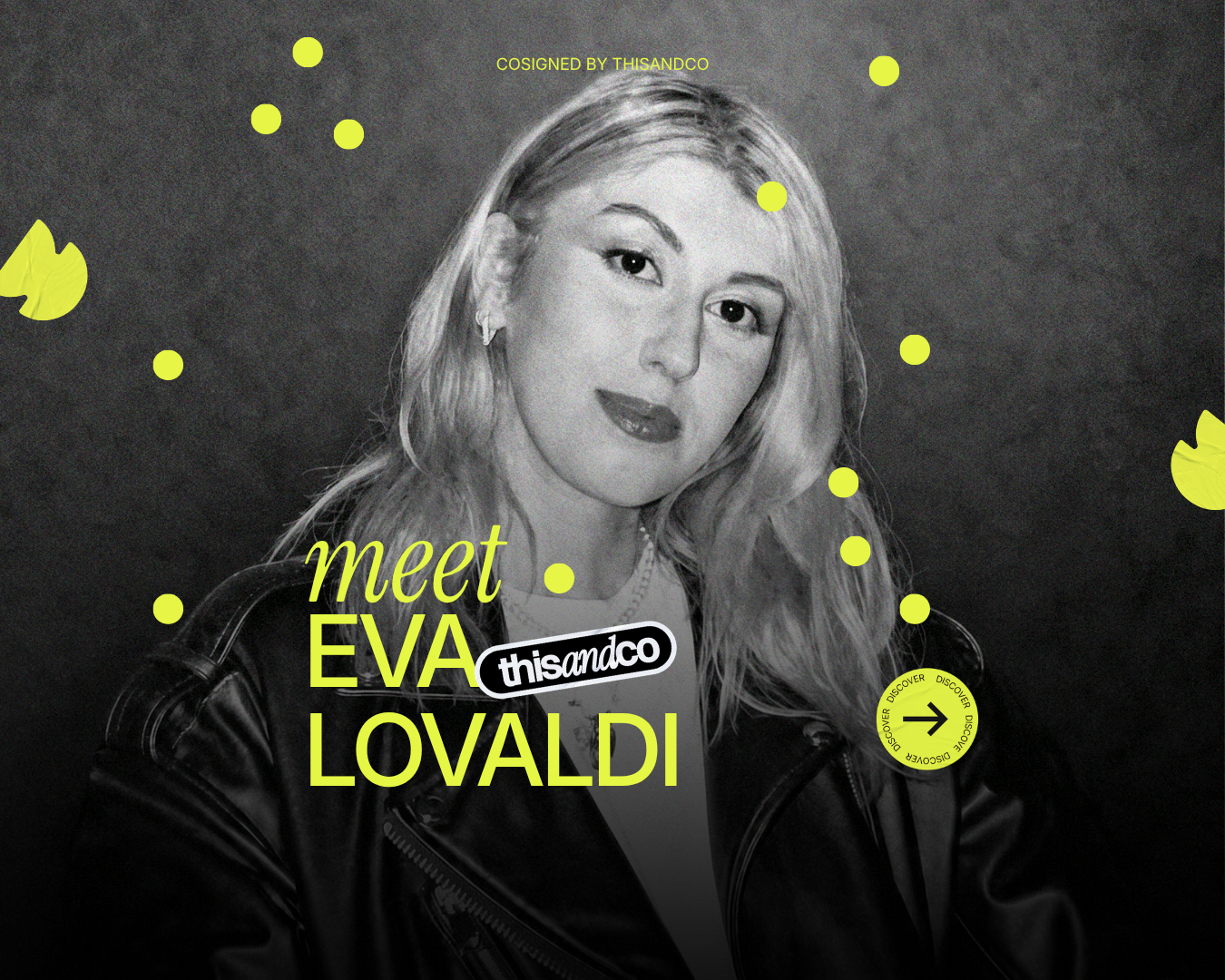

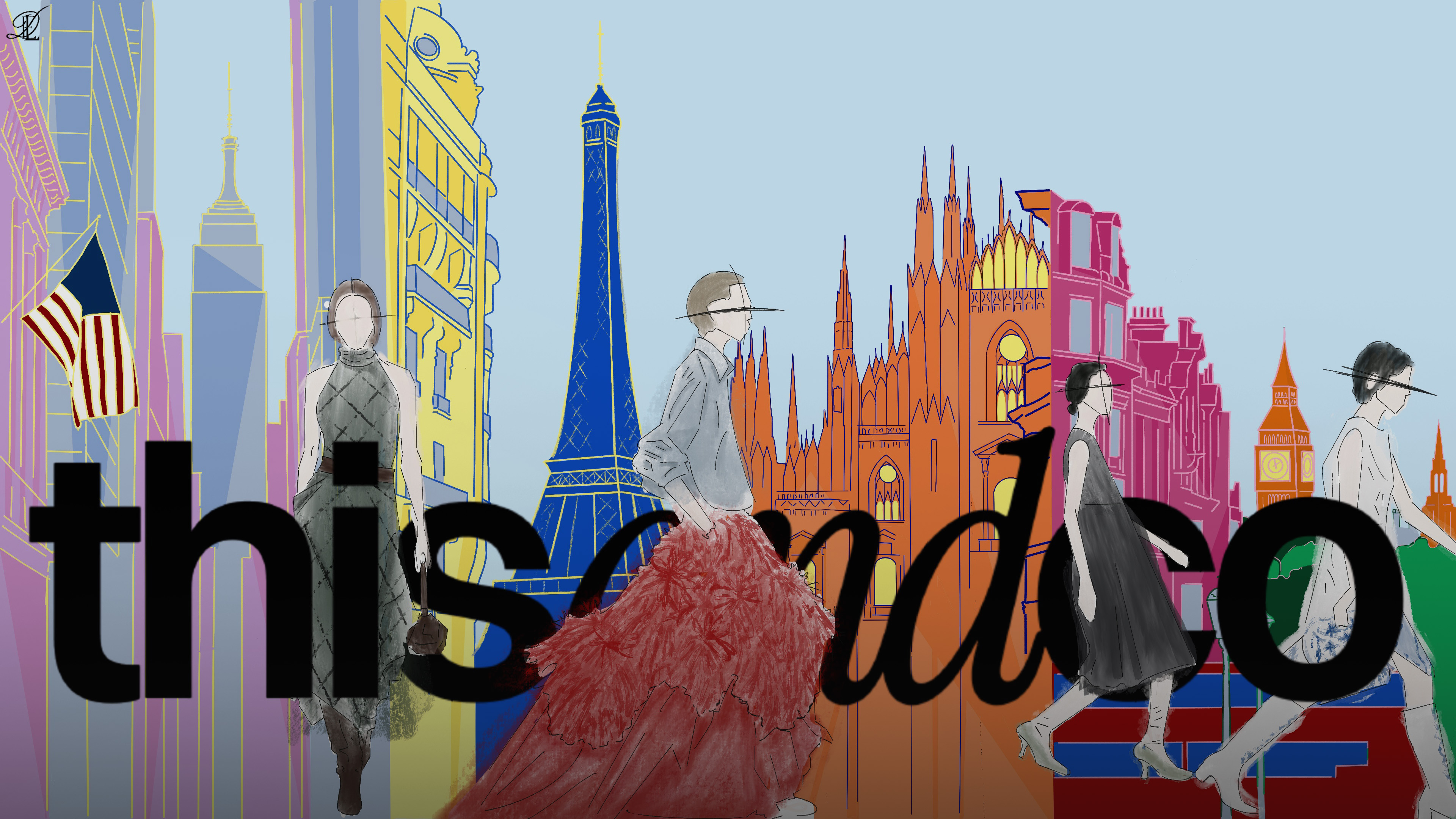
She recently finished her Master’s in Fashion Design & Management at MFI and is now working as an assistant designer at Apnoea. She’s also the designer behind the current footer of our website, bringing her perspective from fashion into our digital space.
We caught up with Eva to talk about what shapes her eye, from geopolitics and Chinese culture to Alexander McQueen, craftsmanship, changing taste and the future of Made in Italy.
Hi, I’m Eva Lovaldi. I’m a fashion designer. I just finished my Master’s in Fashion Design & Management at MFI, and I’m currently working as an assistant designer for the brand Apnoea.
If you’re paying enough attention to political and social events, predicting trends isn’t actually that hard. For example, I’ve been telling my sister for a year that jade was about to hit the mainstream in fashion, and it’s happening. I could give a thousand other examples, but in general, I think we should all try to be as attuned as possible to geopolitics.
From my own interests. Maybe that sounds a bit obvious, but I’m the kind of person who, once I get into something, fully immerses myself in understanding it down to the smallest detail, as much as I can.Right now, for instance, I’m deeply inspired by Chinese culture. Asia has always been a big passion of mine in general, but lately I’ve been especially into China.
There are so many beautiful collections, past and upcoming, that picking just one is hard. I could change my mind a hundred times. But I can say for certain that one designer whose work brought me into fashion in the first place is Alexander McQueen. The layers of meaning behind every one of his collections are what drew me to this world.
Good question. At least for the European fashion system, if we don’t create real protection for artisans and the manufacturing companies that actually cover a large share of production, we won’t last much longer. Buyers are starting to notice that the quality of many products is dropping while prices keep rising. That’s not a sustainable game for long. We have a strong “Made in Italy” reputation, but the problem is we’re losing it year after year, while “Made in China” and other countries are gaining value. If we don’t wake up soon, we risk losing what little we have left.
How a garment moves. Not just how it looks on a still mannequin. The way it falls, how it responds when you walk, turn, sit down. A piece can look perfect in a static photo and reveal all its flaws the moment it meets a real body in motion That’s where you really see the craftsmanship behind a garment.
So, five years ago, haha. I went through a colour evolution, from black to white, and my hair probably proves it. And jacquard fabrics. Take one of the latest Givenchy dresses, for example. The me at the start of my fashion studies would never have considered it. Now I’d wear it every day.
Me?! I trust my own taste a lot, but I’m also someone who questions myself constantly. In my family, I’m the one everyone turns to for shopping, especially my sister. You have no idea how many times she’s called me from inside a boutique not knowing what to buy, because I’m very honest and straightforward. If I had to name someone outside my family, Jennie Kim from BLACKPINK. I’m not saying every single look of hers is perfect, but there’s something in the way she builds her outfits that shows a real creative-direction mindset. Especially for performances, where what she wears always carries meaning. I appreciate that and relate to it. And in everyday life, she always manages to be effortlessly cool.
The level of study and depth behind it. I think this is true for a lot of designers, honestly. Behind every garment there’s a concept, research into a culture or into your own origins. Every collection is, in a way, a journey. It’s sad when people think what we do is frivolous or superficial. In reality, designing a garment requires a lot of cultural knowledge, especially if you’re trying to create something new, which is increasingly hard to do.
It’s getting harder and harder to tell the difference, honestly. That’s the big question in fashion in 2026. My take is that when buying, people should aim for a brand’s “heritage” pieces. That’s where you’re more likely to not waste your money and actually get superior quality.
Knowing how to dress for the occasion you’re walking into, while staying true to yourself and not blending into the crowd. Which feels like a good place to leave it. For Eva, taste isn’t really about following what’s next. It comes from paying attention: to the world, to the craft, to context, and to the details most people don’t stop long enough to see.


.png)